
At some point, every contractor owner has to answer this: do I handle marketing myself, bring someone on payroll, or hand it to an outside team? The wrong answer does not just cost money. It costs months. Here is the honest breakdown so you can decide fast and move.
Option 1: DIY (doing it yourself)
DIY makes sense in two situations. You are early in the business and the budget is tight. Or you want to understand how marketing works before you pay someone else to do it. Both are valid reasons.
The upside is control. You know your customers better than anyone, and that shows up in the content you create. Short videos of your jobs, Google Business Profile updates, and asking happy clients for reviews are all things you can do yourself and they all move the needle.
The downside is time. Marketing done right is not a two-hour-a-week task. Running Google Ads, writing good landing page copy, editing videos, and staying on top of what is working takes real hours. Most owners are already the project manager, the estimator, and the closer. Adding full-time marketer on top of that is how you burn out and end up with mediocre results across the board.
DIY works best when you are under about $750K in revenue and learning the fundamentals is itself the goal. Once you are past that and ready to grow, your time is almost certainly worth more than the money you are saving.
Option 2: Hiring in-house
An in-house marketing person gives you focus. One person whose only job is your marketing. They learn your brand, your voice, and your customers. Over time, that depth shows up in better content and faster execution.
But the cost is real. A decent in-house marketer runs $55,000 to $80,000 a year in salary before you add benefits, taxes, and equipment. And that is for a generalist. A true specialist in paid ads or SEO will cost more. You also have to manage them, train them, and absorb the learning curve while they ramp up. If they leave, you start over.
The biggest hidden cost of in-house is that one person rarely has every skill you need. They might be great at social media but weak on Google Ads. Strong on video but slow on copy. You end up either working around their gaps or hiring a second person to fill them.
In-house works best when you are past $3M to $4M in revenue, you have a specific, high-volume marketing need (like a daily content operation or heavy local SEO), and you have someone internally who can manage and direct that hire effectively.
$2.5M → $6M+ / yr
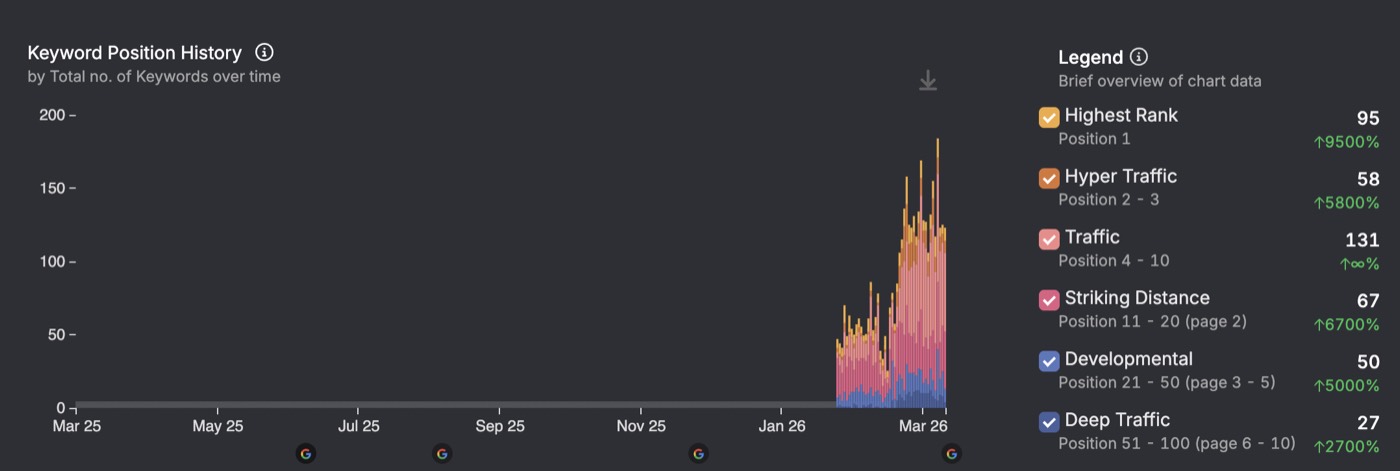
A construction company scaled from $2.5M to over $6M a year after moving away from fragmented in-house efforts and into a focused external marketing system built around their best channels.
Residential construction company
Option 3: Agency or freelancer
An agency or a senior freelancer brings specialized expertise without payroll. You get people who run contractor marketing every day, across multiple markets and trades. They have already made the mistakes you would have to make on your own, and they have the systems to skip them.
The trade-off is relationship management. You have to brief them well, review their work, and hold them accountable to results. A bad agency is worse than no agency. A good one compounds: every month the system learns, the creative gets sharper, and the leads get cheaper.
The right agency also scales with you. You do not have to hire a second person when you want to add Google Ads on top of Meta. You just expand the scope. That flexibility matters a lot in the $1M to $5M range where the business is growing but the overhead needs to stay lean.
A note on vetting: ask any agency for specific results from contractor clients, not case studies from other industries. Construction marketing is different. Lead cycles, job sizes, seasonality, and the types of content that work are all specific to the trade. Check out our guide on how to choose a contractor marketing agency before you commit to anyone.
The hybrid model most $1M to $5M shops run
The most common setup we see in the $1M to $5M range is a hybrid. One internal coordinator (often someone already on the team who is organized and good with people) handles scheduling content shoots, pulling photos off job sites, and being the point of contact with the outside agency. The agency handles execution: ads, SEO, website, and video editing.
This split works because it keeps your overhead low while giving you professional execution. The internal coordinator costs far less than a full marketing hire and does not need deep technical skills. The agency handles the craft. The owner stays out of the day-to-day and just reviews results.
For most contractors in this revenue range, the hybrid model is the sweet spot.
How to decide right now
Ask yourself three questions:
- Budget: Can you afford to hire well, or does every dollar spent on overhead cut into jobs? If budget is tight, DIY or a focused agency beats a mediocre in-house hire every time.
- Time: How many hours a week can you personally give to marketing? If the honest answer is less than five, DIY will not produce real results. You need execution help.
- Marketing literacy: Do you know what good looks like? Can you evaluate whether your ads or your SEO are actually working? If not, an agency relationship is hard to manage well. Either spend time learning the fundamentals first, or find an agency that teaches you while they execute.
There is no universally right answer. But there is a right answer for your stage. A new shop doing $500K should not be paying an agency retainer. A $3M company should not be trying to DIY Google Ads between estimates.
Hear more on this on the Construction Cash Podcast, where we go deep on the marketing decisions contractor owners actually face.
Head back to the blog for more plain-English guides written for construction owners.
$40K in new estimates in 30 days
A contractor who had been trying to manage ads on their own handed off execution to a focused system. Within the first month, $40K in new estimates came through the pipeline.
Home services contractor