Contractor marketing comparison
DIY looks like the cheapest option. But your time has a price. And when you are managing crews, closing jobs, and running a business, marketing is almost always the thing that gets squeezed. Here is the honest breakdown.
Straight talk
Every contractor who built a business from scratch knows how to hustle. You have posted your own jobs on Facebook. You have asked happy clients to leave a review. You have tried Google Ads at some point, or at least thought about it. That scrappiness is a real skill. It is also what got you to $1.5M or $2M in revenue.
The problem is that getting to $3M, $4M, or $5M requires a different approach. The channels are more technical. The competition is better funded. And your time, which is the most valuable thing you have, gets split between running the business and trying to market it. Something always suffers. Usually it is the marketing, which means the pipeline slows, and you get back on the feast-and-famine treadmill.
This page lays it out honestly. DIY makes sense in certain situations. Read both sides.
Side by side
DIY: You do. That means early mornings, late nights, and weekends. You are already the estimator, the project manager, the HR department, and the closer. Marketing is one more hat on a stack that is already too tall.
Quantum Qube: A dedicated team runs the system so you do not have to. You show up to close the jobs that come in. We handle everything that gets them there.
DIY: If your business does $2M a year and you work 50 weeks, your time is worth several hundred dollars per working hour to your business. Spending 10 hours a week on marketing means you are "spending" thousands of dollars a week in owner time, even if the tools are free.
Quantum Qube: The investment goes toward the system running for you, not toward your own labor. You get your hours back to do what grows the business: leading crews, closing high-ticket jobs, building relationships.
DIY: Most contractors are strong in one area, usually social content or asking for reviews, and light in the others. Running Google Ads, optimizing a site for SEO, and producing consistent short-form video all at the same time is a full-time job for a team.
Quantum Qube: Five channels, one team, all connected. Every part of the system talks to the others. You do not need to know Google Ads to have great Google Ads. You just need the results.
DIY: Google Ads alone has a steep learning curve: keyword match types, bidding strategies, Quality Score, negative keyword lists, landing page optimization. Learning it on a live account means your early budget is partly tuition. The same is true for SEO and paid social.
Quantum Qube: We already know what works for your trade. The campaigns are built on data from hundreds of contractor campaigns, not on learning what not to do at your expense.
DIY: When jobs are flowing and crews need managing, marketing is the first thing to go quiet. You stop posting. Ads run without optimization. The website sits. Then the pipeline dries up and you scramble to fill it again. Feast and famine on repeat.
Quantum Qube: The system runs whether you are slammed or slow. Ads keep running. Content keeps going out. SEO keeps building. The pipeline stays full because marketing does not depend on your availability.
DIY: SEO built from scratch takes 6 to 12 months to show meaningful ranking results. Google Ads without experience often spends 3 to 6 months figuring out what does not work. Social content without a strategy produces posts, not leads.
Quantum Qube: Paid ads can book jobs in the first weeks when the campaigns are built correctly from the start. One client saw $40K in new estimates in the first 30 days, before SEO even had time to build.
DIY: Google Ads, Google Analytics, Google Search Console, Meta Business Suite, a CRM, an SEO tool, a website platform, a video editor, a scheduling tool. Separate logins. Separate bills. Data that does not talk to each other. You spend time managing tools instead of reading results.
Quantum Qube: One system. One team. One dashboard that tracks what matters: booked estimates and revenue. You do not manage the tools. You read the outcome.
DIY: When you are the marketing department, growth is capped by your time. You cannot post more, run better ads, or optimize the site faster than your schedule allows. Your ceiling becomes your capacity, not the market's.
Quantum Qube: The system scales independently of your hours. As we find what books jobs, we pour more into it. You stop being the lid on your own growth.
What getting off the treadmill looks like
per month. Same crew size. The owner stopped doing their own marketing and started letting the system run it. The owner's time went back to closing bigger jobs.
Being honest
We are not the right answer for everyone. Here is when DIY is the honest call.
When you are just starting out and the business cannot yet support outside marketing help, doing it yourself is the right move. Post your own jobs. Ask for reviews. Build your presence organically. That knowledge will serve you later, and there is no shame in the early hustle. Get the free strategy video anyway so you know the roadmap.
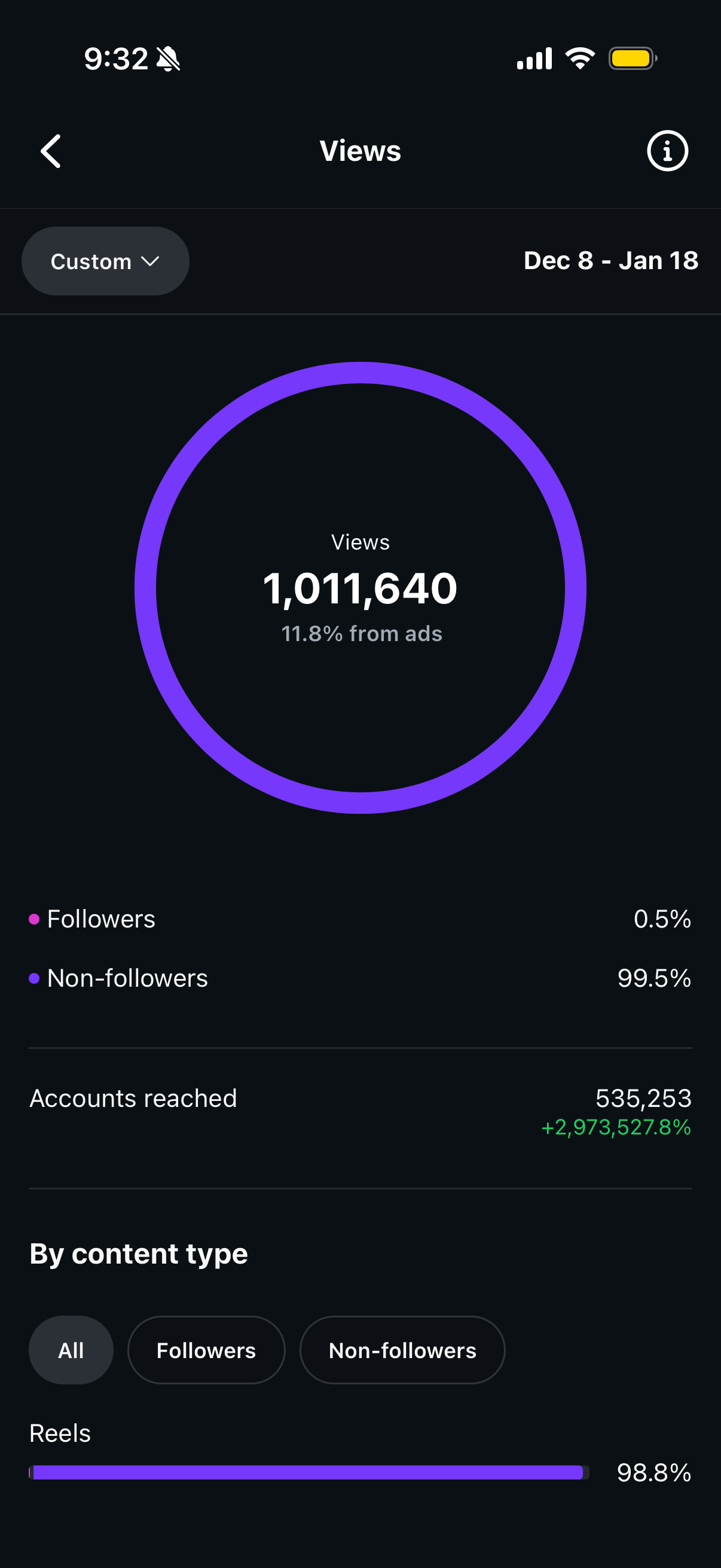
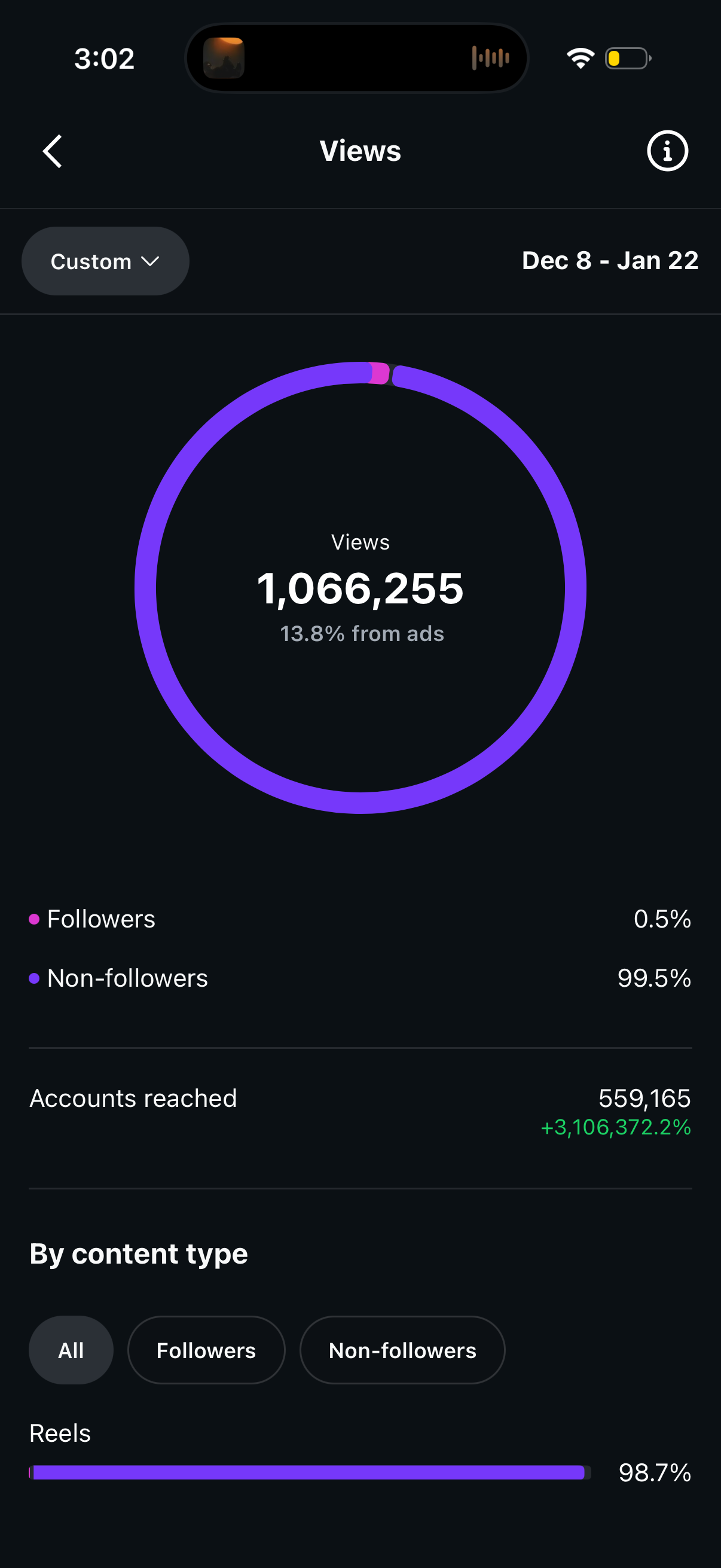
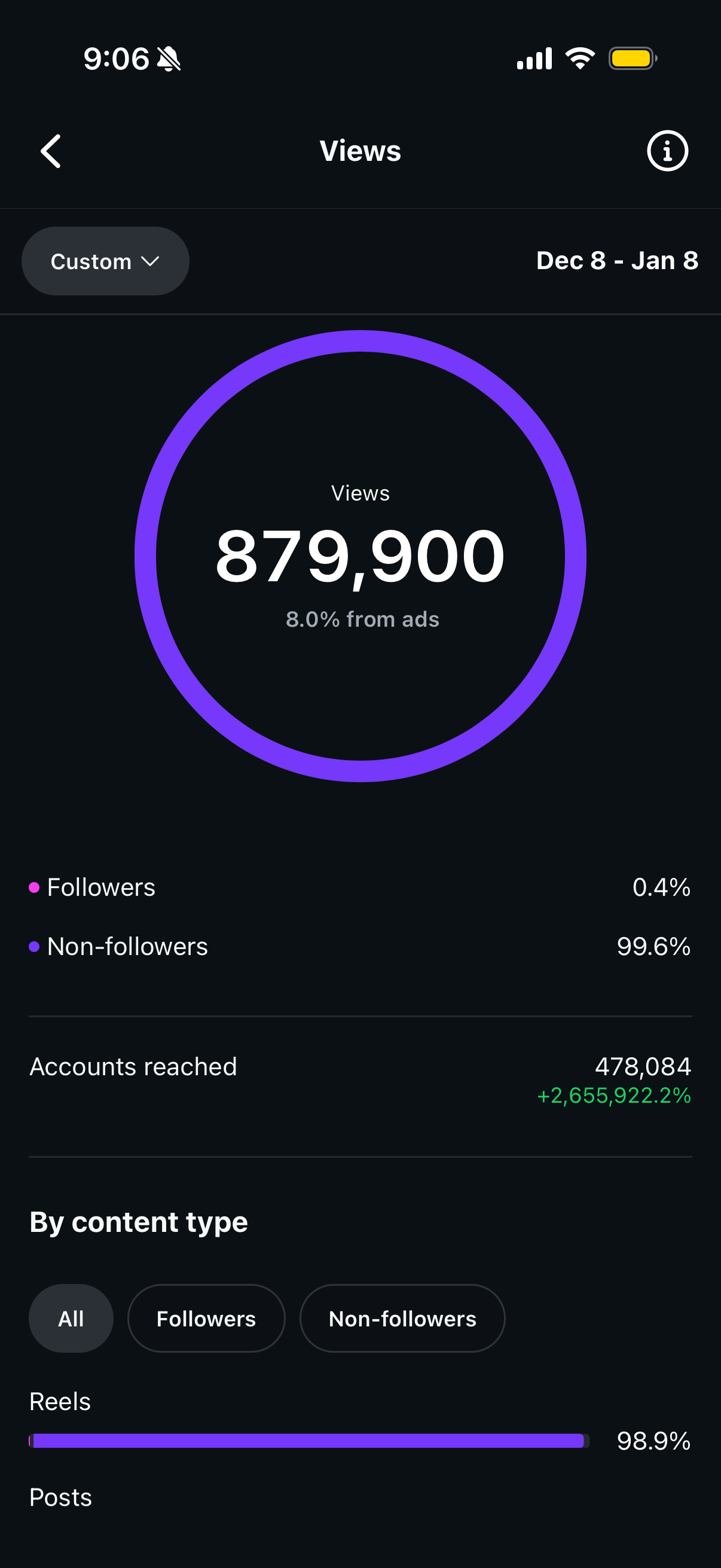
Some contractor owners have a natural talent for short-form video and social content. If you are already getting tens of thousands of views and homeowners are reaching out, keep doing what is working. You may just need help with the paid channels and the site while you own the content side.
If you have a genuine slow stretch and you want to learn the fundamentals of contractor marketing, that is a smart use of the downtime. Understanding how Google Ads and SEO work makes you a better buyer of those services later, even if you hand them off.
If you are launching into a new city or a new service line and want to test demand before investing in a full system, running a small DIY campaign first makes sense as a proof of concept. Once you see traction, scaling with a dedicated system gets you there faster.
Why the system wins
The owners who hand marketing off to the system almost always say the same thing: they wish they had done it sooner.
The owner stops spending weekends on Google Ads and starts using that time to close bigger jobs, lead crews, or finally take a real day off. For most owners, the time recovered is worth the investment by itself.
When you stop doing your own marketing, it does not go quiet. The system keeps running when you are on a job site. The feast-and-famine cycle breaks because marketing no longer depends on your bandwidth.
DIY Google Ads often targets broad keywords that attract tire-kickers asking for the cheapest bid. Properly built contractor campaigns go after intent signals that correlate with high-ticket, ready-to-book homeowners.
Most DIY contractor websites look fine but do not convert. The difference between a site that books calls and one that does not is in the copy, the speed, the structure, and the calls to action. That is a full discipline, not a side project.
Posting when you remember to versus having a content system that builds your brand and trust every week are two very different outcomes. Consistency is what builds the reputation that lets you charge more.
When you stop being the marketing department, the ceiling comes off. You can take on more crews, go after bigger jobs, and expand the business without wondering how you will market the extra capacity you just added.
Real results
$50K → $140K / mo
A residential contractor nearly tripled monthly revenue within a year of running the full system, with the same crew size.
Residential remodeler
$40K in new estimates / 30 days
New estimates booked in the first month after launch. The owner stopped handling their own ads and let the system run.
Specialty contractor
$2.5M → $6M+
A construction company more than doubled annual revenue after replacing scattered DIY marketing with one connected system.
Construction company
Common questions
More comparisons
Big agencies serve hundreds of clients across dozens of industries. Here is what that looks like compared to a trade-specialist system.
Compare national agency vs the system →A full-time marketer costs $60K to $90K all-in and can rarely cover ads, SEO, web, and social alone. Here is the honest breakdown.
Compare in-house vs the system →Real client outcomes from residential contractors running the Quantum Qube system. Verified from their own dashboards.
View results →Your move
Get a free custom strategy video. We look at your trade, your market, and your current situation and show you exactly what a system would do for your business. No cost, no pitch, no obligation.
